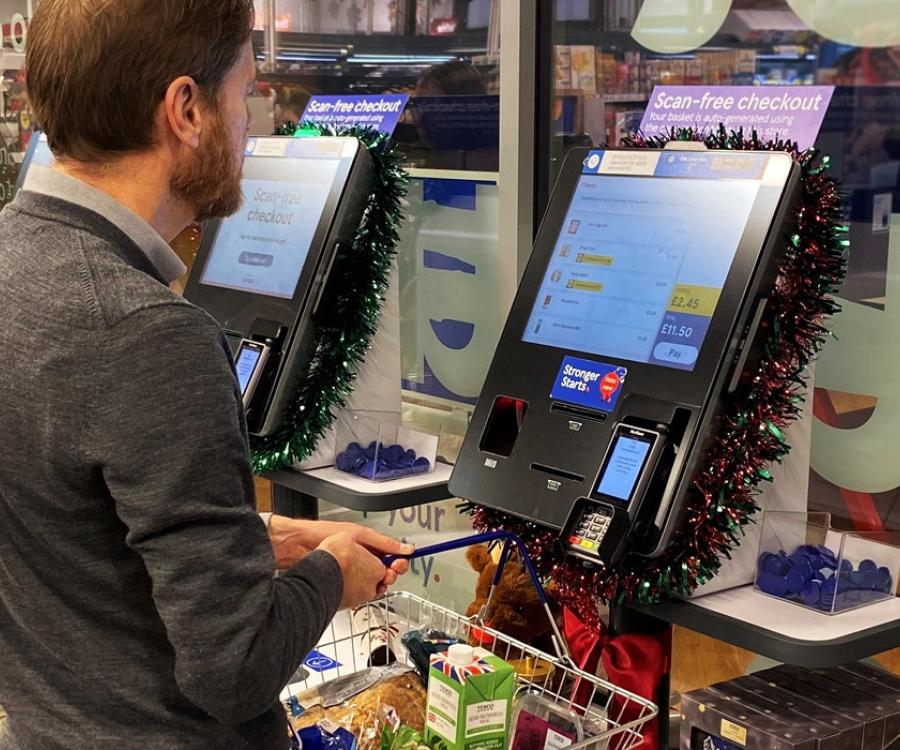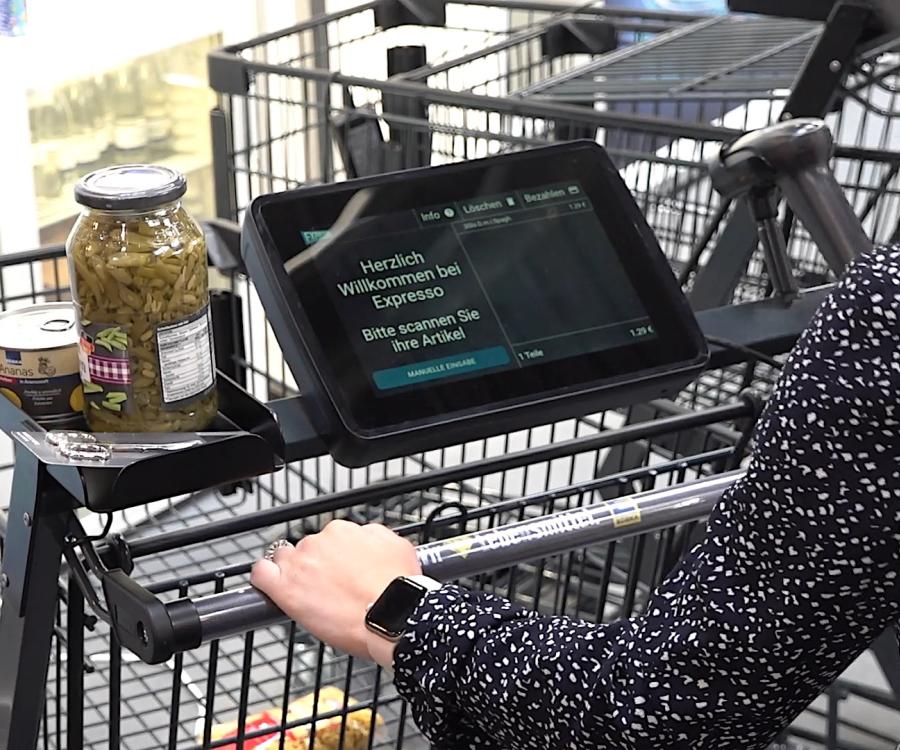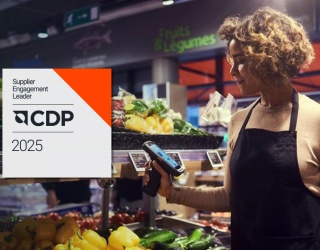
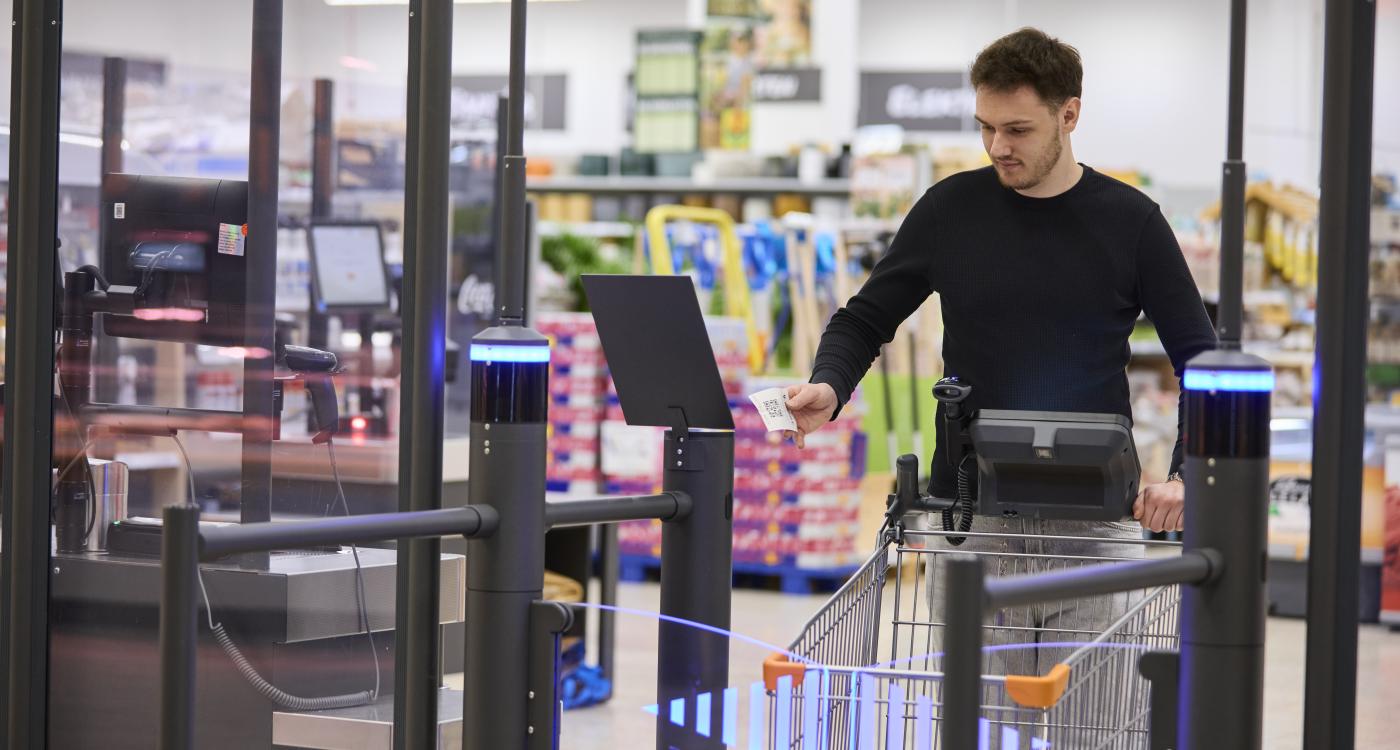
V-Markt, a large-format hypermarket chain in Germany, spent several months testing how different shopping modes – using Wanzl’s smart shopping cart FastLaner®, a handheld scanner, or no mobile service at all – can be combined with two checkout paths, self-checkout and staffed tills, at its store in Munich’s Euro-Industriepark district.
In this interview, Michael Rizzo, Deputy Store Manager, shares what the pilot revealed from both a customer and staff perspective, what he would do differently in a future rollout – and what advice he has for other large-format retailers considering a similar multi-format strategy.
How did customers respond to the freedom to choose between shopping mode and checkout path – were there any surprises in behavior?
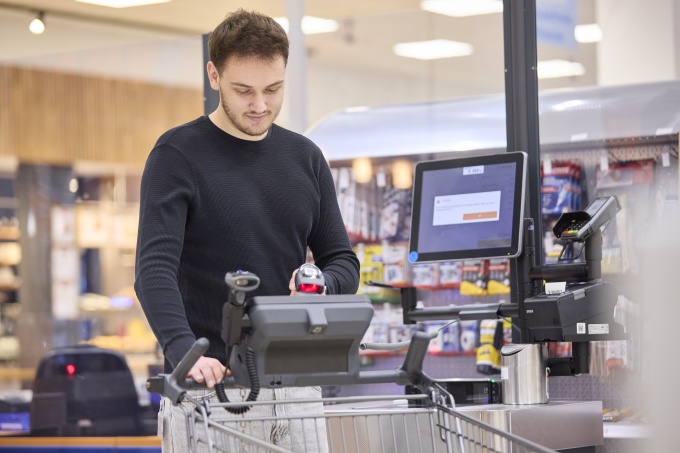
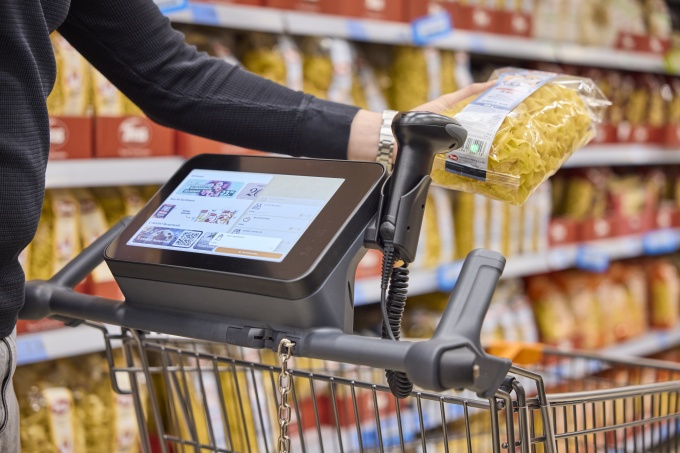
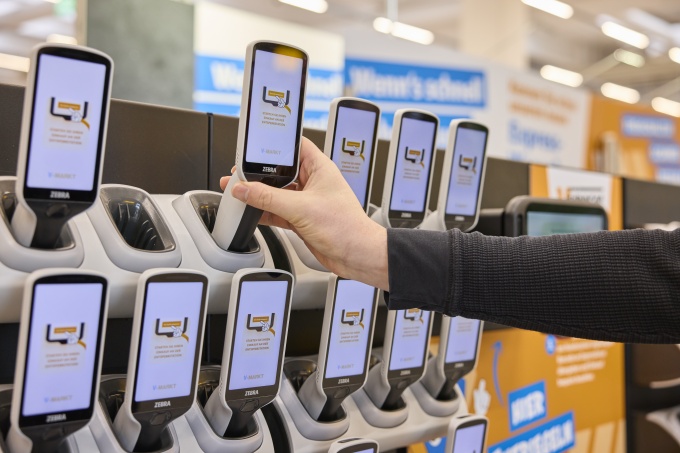
Michael Rizzo: "The freedom of choice was very well received. It was important for us to introduce the new express services as additional options alongside the classic checkouts. Depending on their shopping situation, customers could decide for themselves: staffed checkout, stationary self-checkout, handheld scanner, or the smart shopping cart."

What surprised you most during the test phase?
"One particularly interesting finding was that acceptance was less age-dependent than one might expect. Older customers used the new services too, as long as they received good guidance and a clear introduction on first contact. Multilingual support also helped reduce initial hesitation.
The new services weren’t used only for quick, small purchases: more than 17 percent of sessions lasted longer than 45 minutes. This shows that such formats can also play a role in larger or longer shopping trips. During the test period, FastLaner® accounted for a usage share of 42.3 percent among the mobile express services, developing noticeable relevance in everyday store operations."
New processes, different groups of people: what was the biggest challenge during implementation?
"Integrating new processes into an already-operating large-format store while bringing along both customers and staff – that was the biggest challenge. In a store with around 17,000 square meters of retail space, a wide range of product categories, service counters, deposit-return processes, and peak times, a new checkout offering has to be immediately understandable and work in everyday practice.
During the rollout phase, many customer questions centered on very practical concerns: Do I need to register? Do I need an app or my own smartphone? How does scanning work for items like fruit and vegetables? That’s why open access without prior registration was important, to keep concerns low."
What do you think is the most important thing during a phase like this?
"It’s crucial that staff explain the services in person on the shop floor and actively support customers in the early phase. They had to be able to explain the services clearly and quickly resolve any reservations. Especially among first-time users, curiosity, the fun of trying something new, and direct engagement were important motivators alongside time savings. This personal support helped lower the barrier to entry."
Which technical or organizational issues caused the most effort during day-to-day operation?
"The greatest effort arose at the interfaces between technology, existing store processes, and specific customer situations. During live operation, points for optimization included Wi-Fi stability, scanning processes, data transfer during the checkout process, special cases such as fuel vouchers, and product and promotional-price recognition."
What would you do differently in the rollout today?
We would plan the rollout even more as a holistic communication and process project, thinking beyond pure implementation from the very start. The pilot showed that early staff involvement, clear explanatory formats for customers, visible support in the early phase, and stable technical conditions are decisive.
We would also work through certain special cases and process questions more systematically before launch – for example, handovers during the checkout process, less common item or voucher processes, and how to keep manual effort for store staff as low as possible. At the same time, we would define the system’s long-term vision earlier – for instance, which interfaces, additional functions, or future applications such as retail media could become relevant. That said, we would build in the same freedom of choice again, because it was a key factor for acceptance. From our point of view, it’s important not to treat FastLaner® as an isolated piece of technology, but as part of a long-term digital and process strategy.
What advice would you give other large-format retailers considering a similar multi-format strategy?
"Our advice would be to treat a multi-format strategy as a holistic project. What matters most – and this point bears repeating – is the interplay between technology, store processes, staff, and customer communication. Especially in large-format retail with very diverse shopper types, the system has to work for everyone in everyday use.
From our perspective, three points matter most: 1. Freedom of choice, so customers can select the checkout format that suits them. 2. Early involvement of staff, since they explain and carry the services in day-to-day operation. 3. An active rollout with direct engagement and simple explanation. A pilot like this should also be deliberately designed as a learning process. Its real value shows where real customers, real shopping baskets, and real store processes come together."
According to Wanzl, the systems from the pilot project will remain in use at V-Markt until the end of 2026.