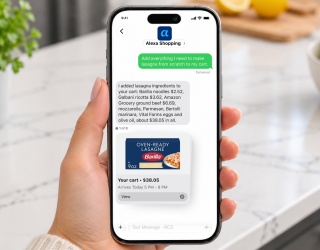
Quick commerce long seemed to be a matter for dark stores. Now it is moving back into the store, just in time for Christmas. MediaMarktSaturn, REWE and Amazon are betting on delivery from nearby locations. For retailers, this is less an IT question than a question of staff hours, walking routes and square metres.
One order, one hour, one courier at the click & collect station: at MediaMarktSaturn, this has been everyday practice in 236 stores since 3 November. Since mid-September, REWE has been delivering from its stores via Uber Eats, Wolt and Lieferando, and since 30 October, Amazon has once again been bringing fresh groceries the same day in Frankfurt, Cologne and Munich. More interesting, however, is what changes inside a store when it delivers every day.
Three examples, one pattern
At MediaMarktSaturn, staff at the nearest store put together the order from up to 10,000 items at shelf price. A Lieferando courier then collects it at the click & collect station. "We can only manage one hour from order to doorstep together," says Matthias Johanning, Managing Director of MediaMarktSaturn E-Commerce GmbH. REWE takes the same approach but uses three platforms at once: orders are picked in the store and delivered by Wolt, Uber Eats or Lieferando. According to REWE, instant delivery is now available in 13 cities, including Cologne, Hamburg, Berlin and Frankfurt, and the rollout to medium-sized cities is under way. Unlike at MediaMarktSaturn, prices here may differ from in-store prices.
Amazon, by contrast, is coming from the opposite direction. According to Supermarktblog, the company, which has no stores, is setting up more than 25 same-day sites in Europe by the end of the year, with warehousing, picking and delivery under one roof. In doing so, Amazon is building exactly the proximity that bricks-and-mortar retail has long had.
Who picks, and where do the staff hours come from?
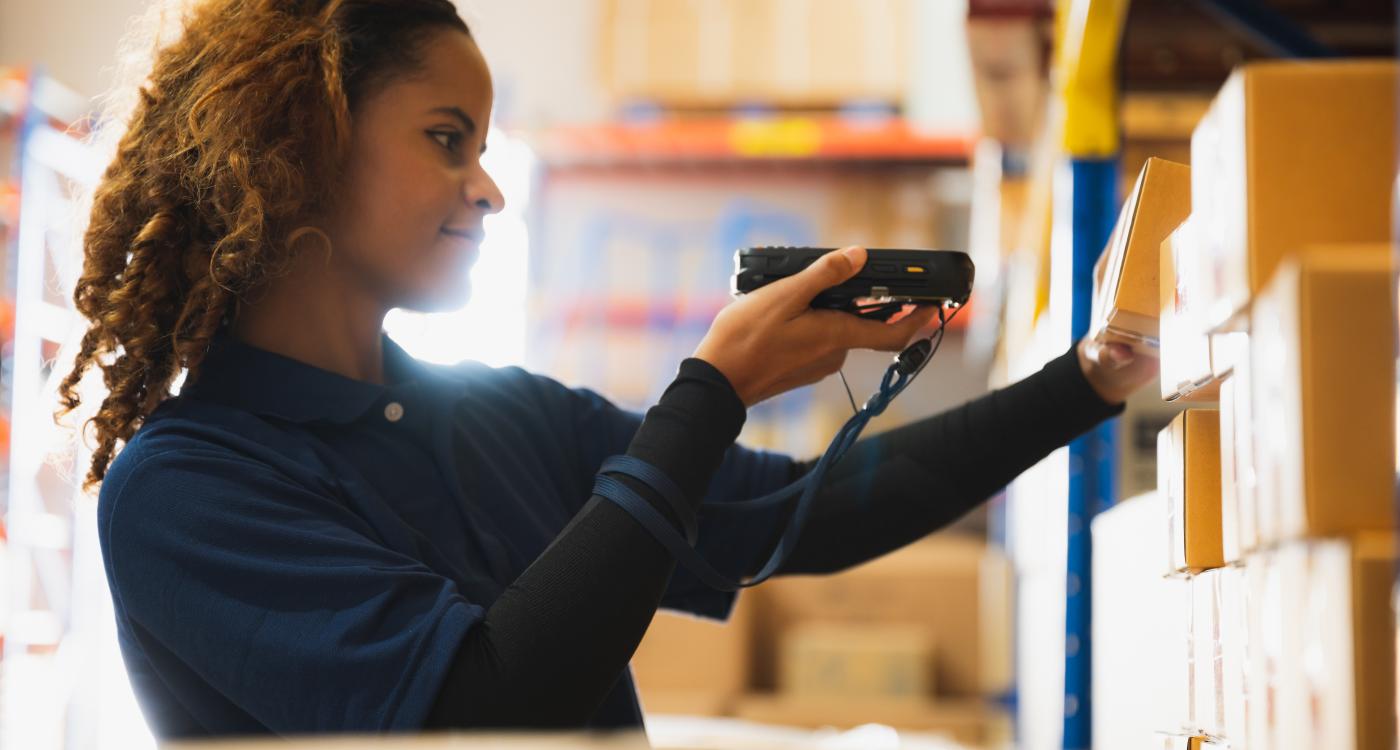
Click & collect was easy to plan, because orders could be bundled and picked during quiet hours. The one-hour promise overturns this logic: since the journey takes up a good part of the hour, picking has to start almost immediately. Every order becomes an interruption, and who handles it is a question of organisation:
- A dedicated picker role at peak times: easy to plan, but expensive when orders fail to come in.
- Rotating responsibility via handheld device: cheaper, but prone to problems as soon as the store is busy.
- Linking picking to the service desk: short routes to the station, but it competes with customer conversations.
Things get particularly tricky when half of Germany is hunting for presents: online peaks and crowded aisles then coincide, and the additional staff hours do not appear by themselves. Options include time freed up from tasks that are declining, seasonal workers for order peaks, or a separate budget funded by platform revenue. Stock accuracy is also often underestimated. Anyone offering 10,000 items in a third-party app needs to know whether they are actually on the shelf. Otherwise the wish list goes unfulfilled, and customers blame the store, not the platform. Reporting should therefore include three figures: time to order readiness, error rate and courier waiting time.
What happens in front of the station?
With platform delivery, the click & collect station turns into a loading bay on the sales floor: couriers arrive several times a day, often several at once, and wait until the order is ready. At REWE, for example, the company's own staff pick the orders and hand them over at the collection point, to couriers instead of end customers, as the company stated on request. This results in four points for space planning:
- Location: close to the entrance, so that nobody has to walk right across the store.
- Staging: a secure zone with orders assigned by code. The games console belongs under the Christmas tree, not out in the open on the counter.
- Cold chain: fresh and frozen goods need a refrigerated handover.
- Waiting area: Where do couriers stand, and where do they park their bikes? Otherwise the pavement ends up deciding.
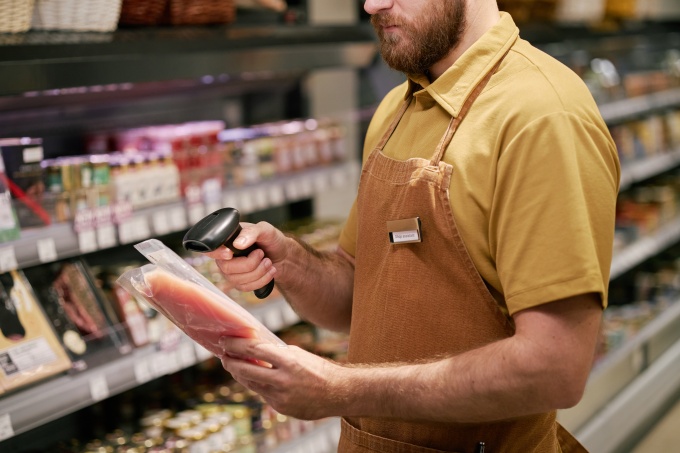
Inside the store, too, pickers share the aisles with customers, which is a real test of patience in December. A picking route that follows the shelf layout saves minutes per order.
A look at the UK: where store-based delivery is already standard
In the UK, the shift from the dark store to the store is already well advanced. According to the market research institute IGD, the store has become the dominant model for quick commerce, with stores serving as hubs. Sainsbury’s alone generated more than £700 million in rapid delivery sales in 2025, up 69 per cent. Tesco’s in-house service Whoosh now delivers from around 1,800 stores and reaches more than 70 per cent of the population. Since summer 2026, Tesco has also been on Uber Eats and Deliveroo, the last of the major supermarkets to join the platforms. Asda delivers via Deliveroo from more than 850 stores, and Co-op and Morrisons work with Deliveroo and Just Eat. Amazon is coming from the opposite direction here too: since June 2026, Prime customers in parts of London have been able to add fresh groceries to their same-day orders, free of charge from £20. IGD expects the UK quick commerce market to reach £5.5 billion by 2031.
Does it pay off?
A dark store has to pay for every square metre with delivery orders alone, and this is exactly where many have failed: according to Panorama and Süddeutsche Zeitung, Gorillas lost 5.30 euros per order, and Getir withdrew from Germany in May 2024. Flink, by contrast, has held its ground after a tough restructuring and has reported profits since August 2025.
The store has the advantage, because space, goods and staff are already in place. Even so, the business doesn't come for free: what counts per order is the gross profit minus commission, picking time, packaging and missing items. Nobody discloses the commission rates, but with shelf prices they usually come out of the margin. E-commerce professor Matthias Schu of Lucerne University of Applied Sciences and Arts therefore recommends testing with 50 to 100 orders per week. According to him, a dedicated warehouse becomes cheaper from around 4,000 orders per month. Above all, controlling should measure whether delivery generates new revenue or merely shifts existing revenue.
The store becomes a micro-warehouse, with a sales floor
In the end, quick commerce rarely fails because of the app, but because of the last hour before handover. MediaMarktSaturn and REWE therefore hand over delivery and keep what they do best: product range and location. Retailers with stores start with a head start, provided that staff, routes and space grow with demand. Before Christmas, five questions are worth asking:
- Who picks during peak hours?
- Are the stock levels in the app accurate?
- Is the handover point close to the entrance, secure and refrigerated?
- Where do the couriers wait?
- Does delivery bring in new revenue?
You might also be interested in: